
Blog
- Blind tasting tip: funneling
In my latest article for the Napa Valley Wine Academy, I explain the concept of “funneling” on a blind tasting exam and how it can help students pass the notorious D3 tasting exam that is part of the WSET Level 4 Diploma in Wines program:

For many WSET diploma students, one of the most intimidating parts of the program is the D3 blind tasting exam, which involves writing tasting notes, quality conclusions and various identification answers about 12 wines. The WSET always publishes the exam wine list a couple of days after the test, and its publication usually produces two responses: jubilation from students who got a lot of the wines “right” and despair from students who didn’t.
While the post-exam psychological boost of acing wine identification is nice, it’s important to remember that the majority of the available points come from accurately observing the different characteristics of each wine (pale intensity, dry, full body, etc.), rather than correctly identifying where the wine is from or what grape variety it is. You can actually pass the D3 tasting exam without correctly identifying any of the wines.
While you’ll have to answer some identification questions, if you end up choosing a grape or region that is wrong but makes logical sense based on how the wines taste, you can pick up a lot of points for showing the examiner your thought process. One way to accomplish this on exam day is to think of identification arguments like a funnel, which starts wide at the top and becomes more narrow as you move toward your conclusion. A good funnel helps an examiner award you points for the parts of your argument that were logical, even if your final answer was incorrect.
- Aiming for the WSET Diploma?
As the director of the Napa Valley Wine Academy’s WSET Level 4 Diploma program, I often speak to students hoping to complete the diploma program. Recently I wrote an article for the NVWA blog about what you can study to prepare for diploma-level studies. Read on for my tips:

Many students hope to someday complete the WSET Diploma and be able to put the letters DipWSET after their name. Of course, a major hurdle is completing WSET Level 3. After you take the Level 3 exam, there is a long wait (up to 12 weeks) to receive your results before you can enroll in the Diploma. So if you’re motivated to continue on Diploma-level studies, how can you keep your study momentum up during the waiting period for your results?
Click here to view my recommended resources on the NVWA blog, most of which are free!
- Precision Viticulture: Water
In the third and final installment of the precision viticulture series I wrote for the Napa Valley Wine Academy, I look at how wineries are managing their water use for maximum efficiency:
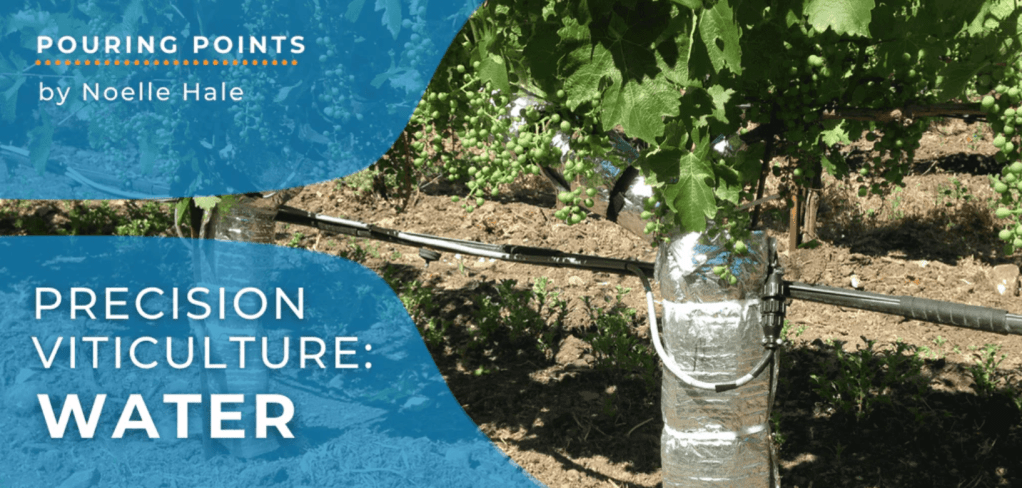
In this final article in our three-part series, we’ll look at ways grape growers are using technology to be as effective as possible with their water use in the face of drought and a changing climate.
Water is a foundational element of crop production. Without access to water, plants can’t survive. As water has become scarcer in the western United States, home to much of America’s wine grape production, grape growers (and other farmers) are increasingly being asked to use less, and there’s no end in sight to the dry conditions.
As previously discussed in our articles on land and air, precision viticulture technologies can help growers make data-driven decisions about vineyard soils, vine health, disease mitigation, and more, and they can also help with water management. In this final article in our three-part series, we’ll look at ways grape growers are using technology to be as effective as possible with their water use in the face of drought and a changing climate.
But first, a quick science lesson. As a grape-growing season progresses and temperatures rise, water evaporates more quickly out of the soil, and vines also use more water to stay cool and photosynthesize nutrients. Vine leaves have tiny pores on their undersides, called stomata, which normally release water in a process known as transpiration. Think of it as the way a vine breathes. The measurement of the amount of water being lost through the soil and the vine is known as evapotranspiration (evaporation + transpiration).
- Precision Viticulture: Air
For the second article in my series about precision viticulture for the Napa Valley Wine Academy, I looked into how precision viticulture techniques are being used from the air.
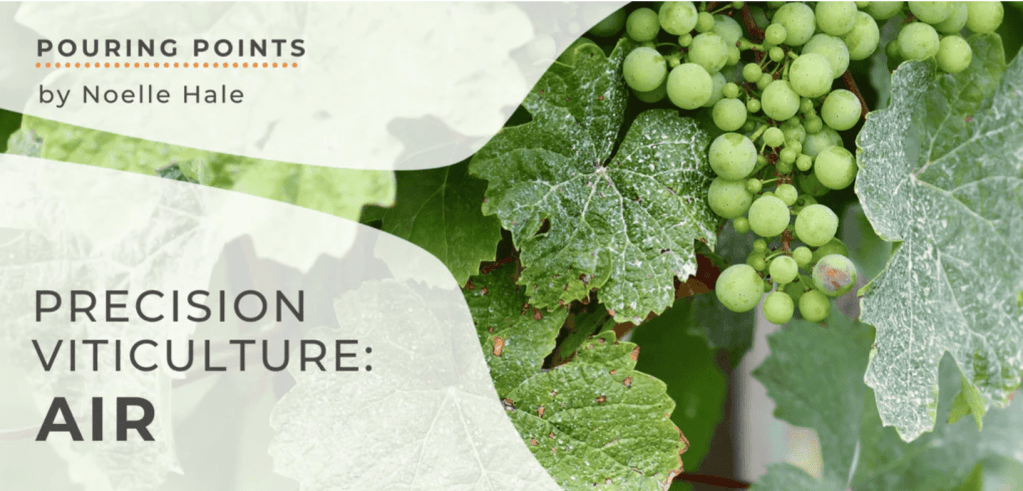
Welcome back to our series of articles focused on emerging technologies in precision viticulture. In this three-part series, we’re looking at how new viticultural technology is helping get the wines you love into the bottle more easily and safely for the people who grow their precious raw material: grapes.
In our first feature, we dug into Land. In this essay, we’re looking to the skies for some technologies that leverage the air itself to provide new insights to grape growers.
Smoke Mapping
With California experiencing more frequent and severe wildfires coinciding with the grape growing season and harvest, growers have scrambled for solutions to deal with smoke tainted grapes, which can lead to wines with an unpredictable and unpleasant ashy taste. Research is ongoing on many fronts, but so far, it has been challenging to determine exactly when in the growing season smoke taint potential is the greatest, as well as how much exposure to smoke is damaging.
- Looking ahead with precision viticulture
I recently wrote a series of reported articles on emerging technology in precision viticulture for the Napa Valley Wine Academy. Here’s the first one:
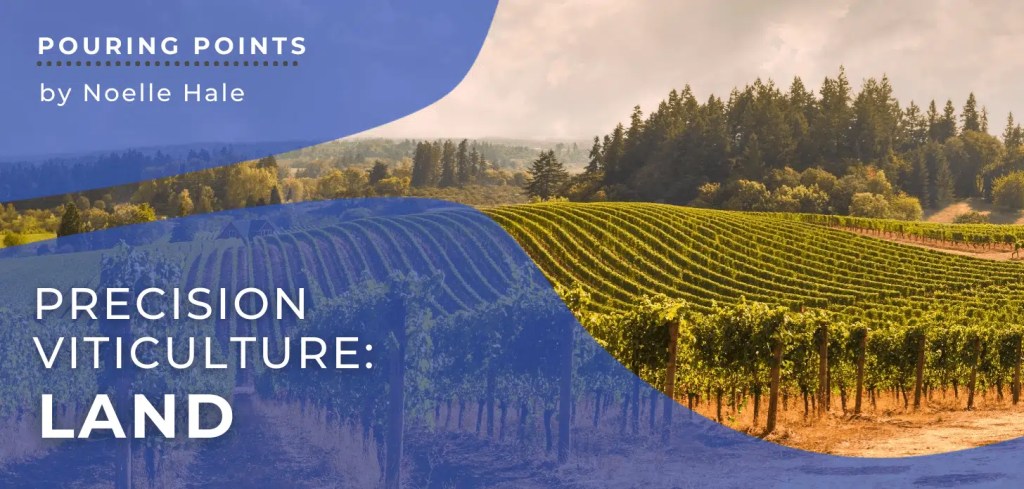
Illustration by Napa Valley Wine Academy Whether you’re enjoying the breeze in your hair while strolling through a vineyard, tasting a new vintage straight from the barrel with the winemaker, or savoring a leisurely lunch on a sun-soaked winery patio, it’s easy to fall in love with the romance of wine. So easy that, sometimes, we forget that grapes are actually an agricultural crop. But as any grape grower will tell you, their struggles are the same as any other year-round farmer’s: scarce labor availability, potential health risks, achieving target yields and quality levels, and ever-escalating costs. To combat this, much of American crop production increasingly relies on high-tech precision agriculture to boost yields and quality while decreasing costs. Many technologies now used in vineyards started out in the production of other crops, such as corn or wheat. While many students of wine are familiar with mechanized harvesting or mechanical pruning, other beneficial technologies are newer and less well-known to consumers.
In a new series of articles, we’ll explore some of these newer ways viticulturists are using technology to increase safety and grow better grapes with less work. We’ll be focusing on land, air, and water, each in turn, considering how new technologies work, what they are replacing, and how they are helpful.
 Noelle Hale